
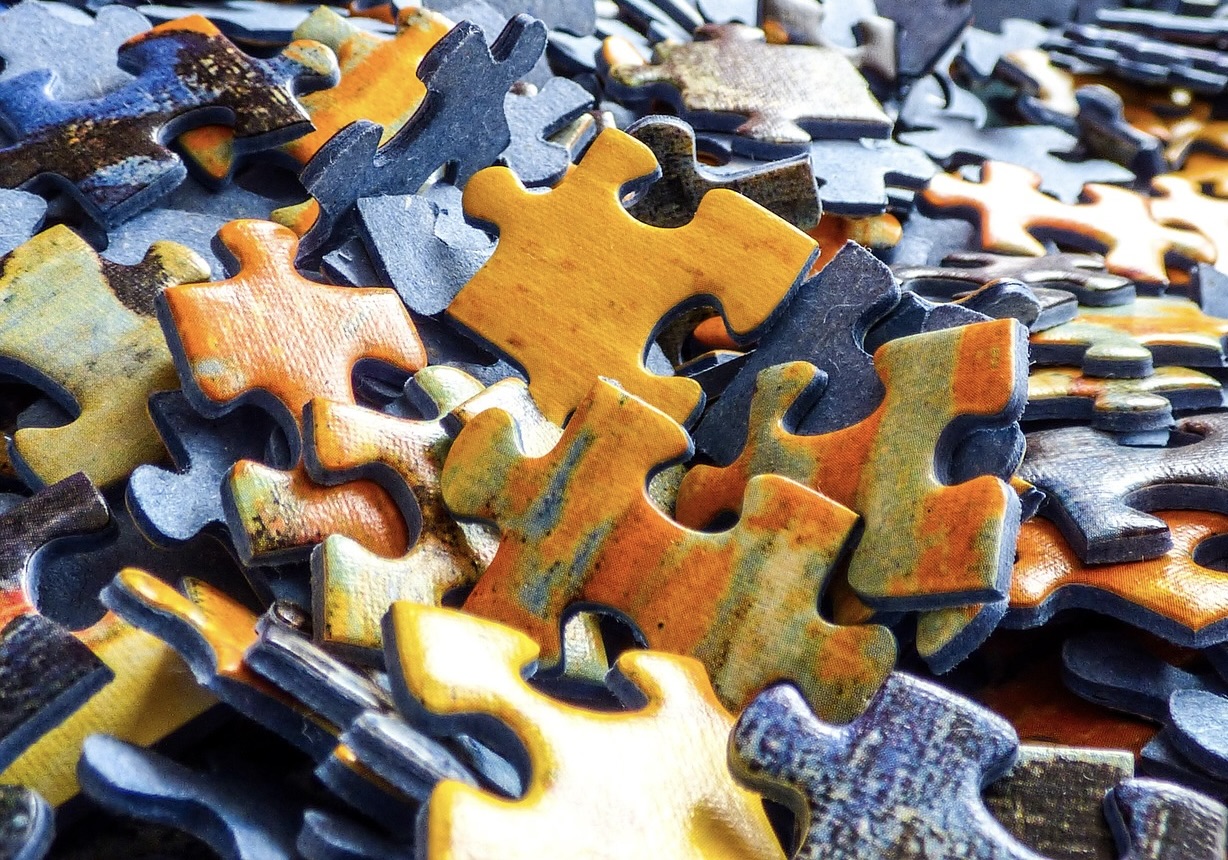
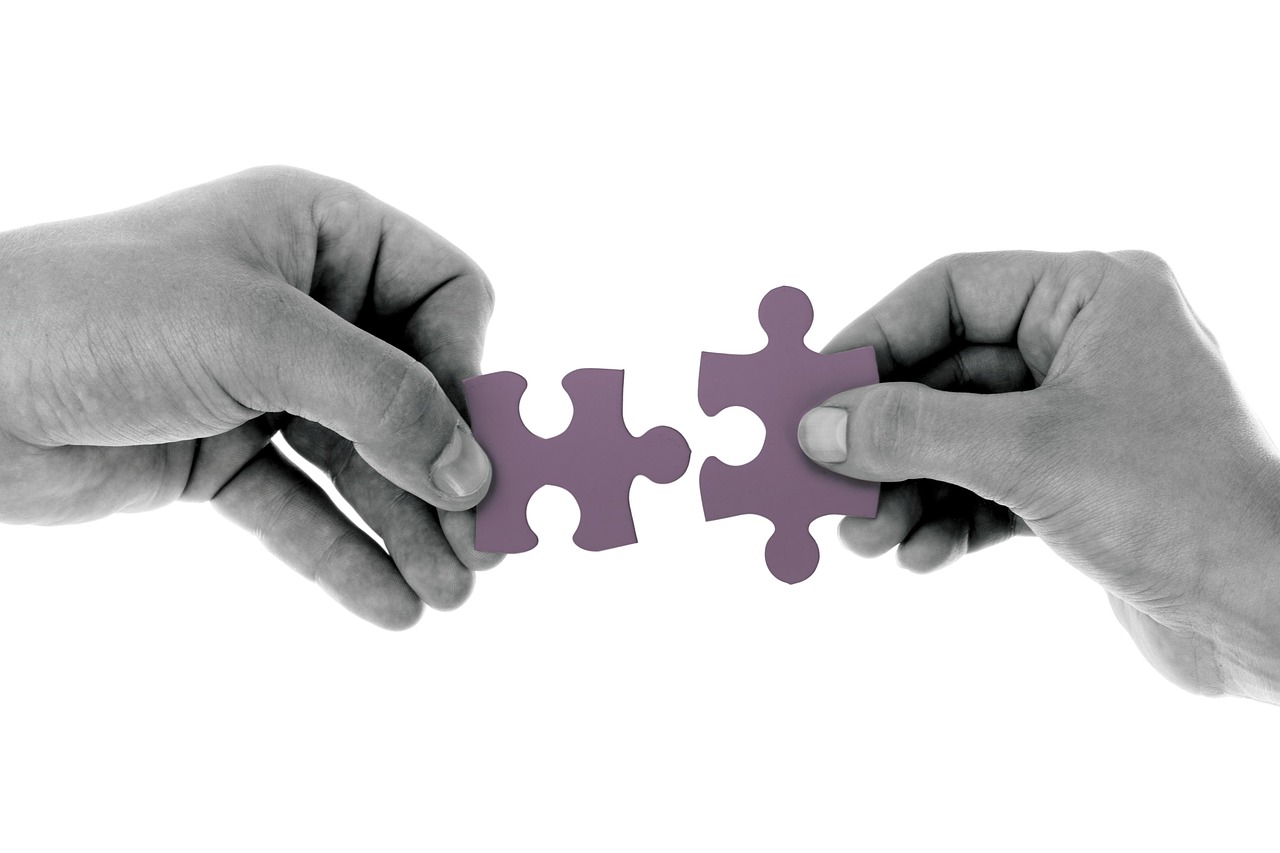
It’s time to admit it, isn’t it: It’s a puzzle from start to finish. Especially now, this year, as some of the pieces we thought fit together snugly and securely are starting to break apart. We’ve spent our lives trying to learn and make sense of things; and we thought that by the time we neared the end, we’d have it all together. But, no. We’re still full of questions, like puzzle pieces scattered on the carpet of our brains.
(Pixabay stock photo)
When I was about three years old, as I recall, my favorite new word was WHY. I badgered my beleaguered mother with questions – why this and why that – following her around the house like the shadow-of-her that I was. She would throw up her hands, admit she didn’t have all of life’s answers, and beg me to save my good questions for my teacher when I got to kindergarten.
“But that’s two years from now!” I howled.
“I know you can do it, Bon,” she’d say soothingly, patting my head. She had great faith in me.
But still, after all these years, I ask too many questions and howl (inside) without answers. Why is there so much cruelty and injustice in this world? Why should the people of Palestine, Ukraine, and Sudan suffer so? How is it that one man – the “richest man in the world” — makes tens of millions of dollars PER HOUR, while countless poor people all over the world starve? Why can another man take a wrecking ball to the White House East Wing – to say nothing of the entire U.S. government — without constraint? How will human beings live when Artificial Intelligence takes over in a few years?
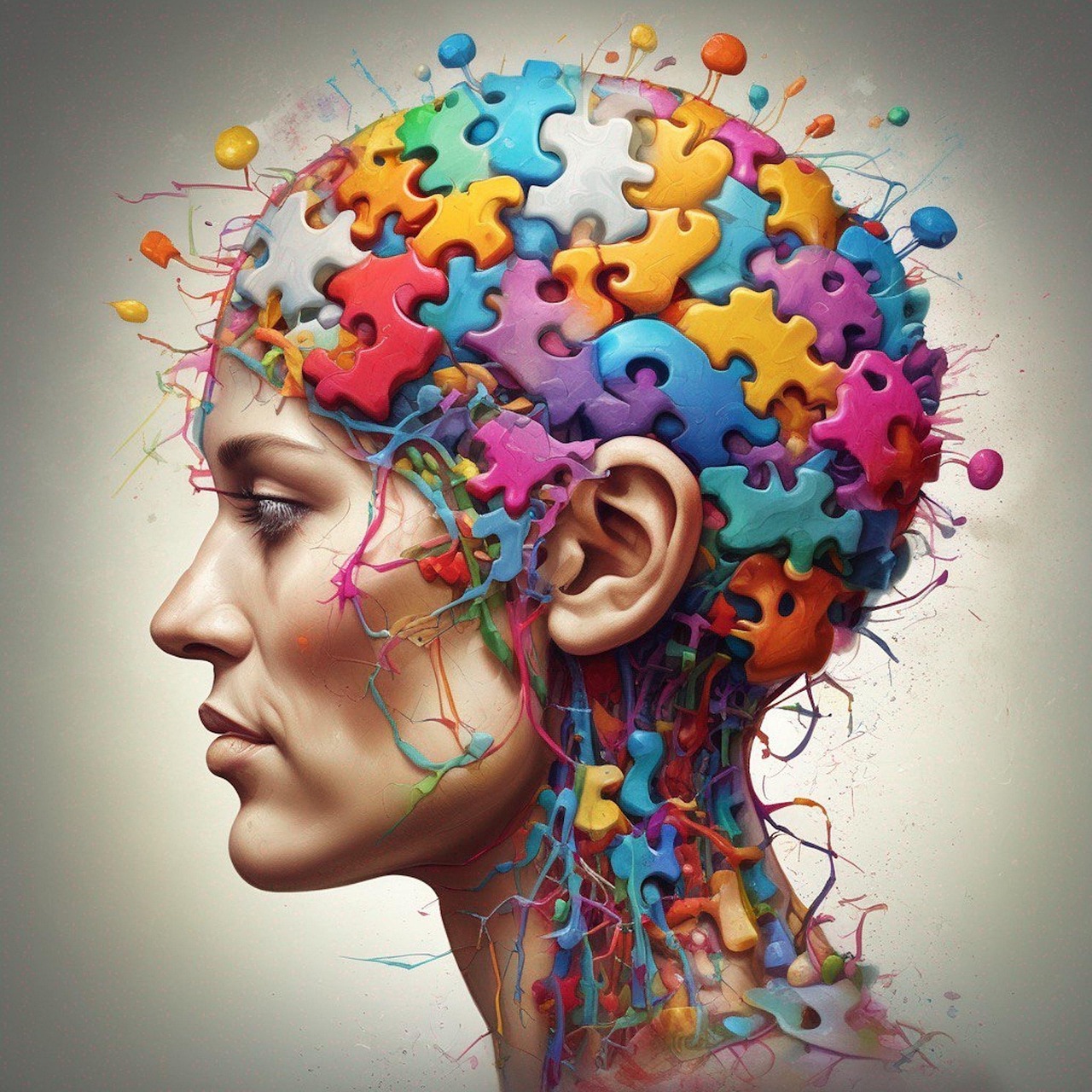
And, on a much smaller and more personal level: Why can’t I, even after ten years of trying, grasp the Spanish language? This question has taken on much more urgency this year (after Trump’s second inauguration last January) as I pursue dual, Mexican-American, citizenship, for which I’ll need to pass a crucial Spanish exam. I study every day, and I do learn things. But it’s still essentially a jumble of puzzle pieces in and on my tired old brain.
(Pixabay stock photo)
Here’s a beautiful polysyllabic (they’re all polysyllabic, it seems to me) Spanish word I learned recently: ROMPECABEZAS. It means riddle or puzzle, especially zigsaw puzzle. According to Professor Google:
The Spanish word for puzzle or riddle, “rompecabezas” literally means “head-breaker,” combining “rompe” (from the verb romper, meaning “to break”) and “cabezas” (the plural of cabeza, meaning “head”). This compound word suggests something that “breaks one’s head” in the sense of being mentally challenging or difficult.
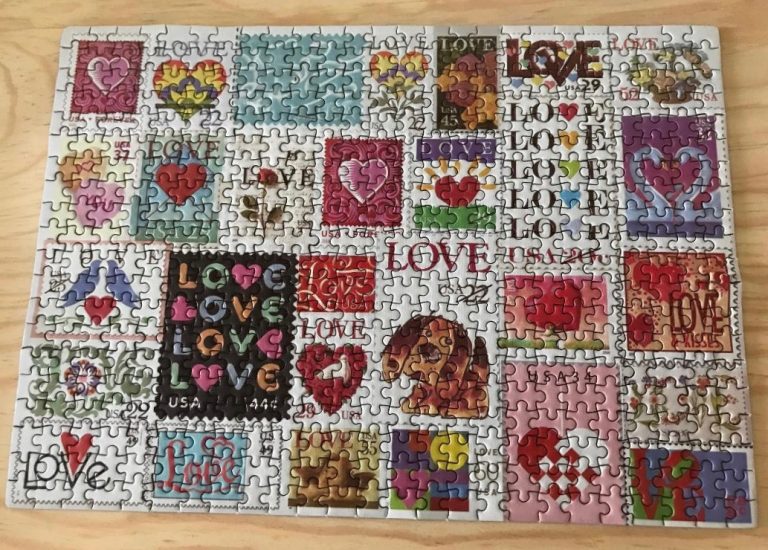
During the COVID lockdown some five-or-so years ago, for the first time in my life, I did a whole jigsaw puzzle by myself, and I began, piece by piece, to understand the attraction. It takes patience, focus, and tenacity, like any worthy life endeavor. But when it’s done, there’s cause for rejoicing:
At that time I learned that jigsaw puzzles were originally created as teaching tools for children. As Prof. Google taught me:
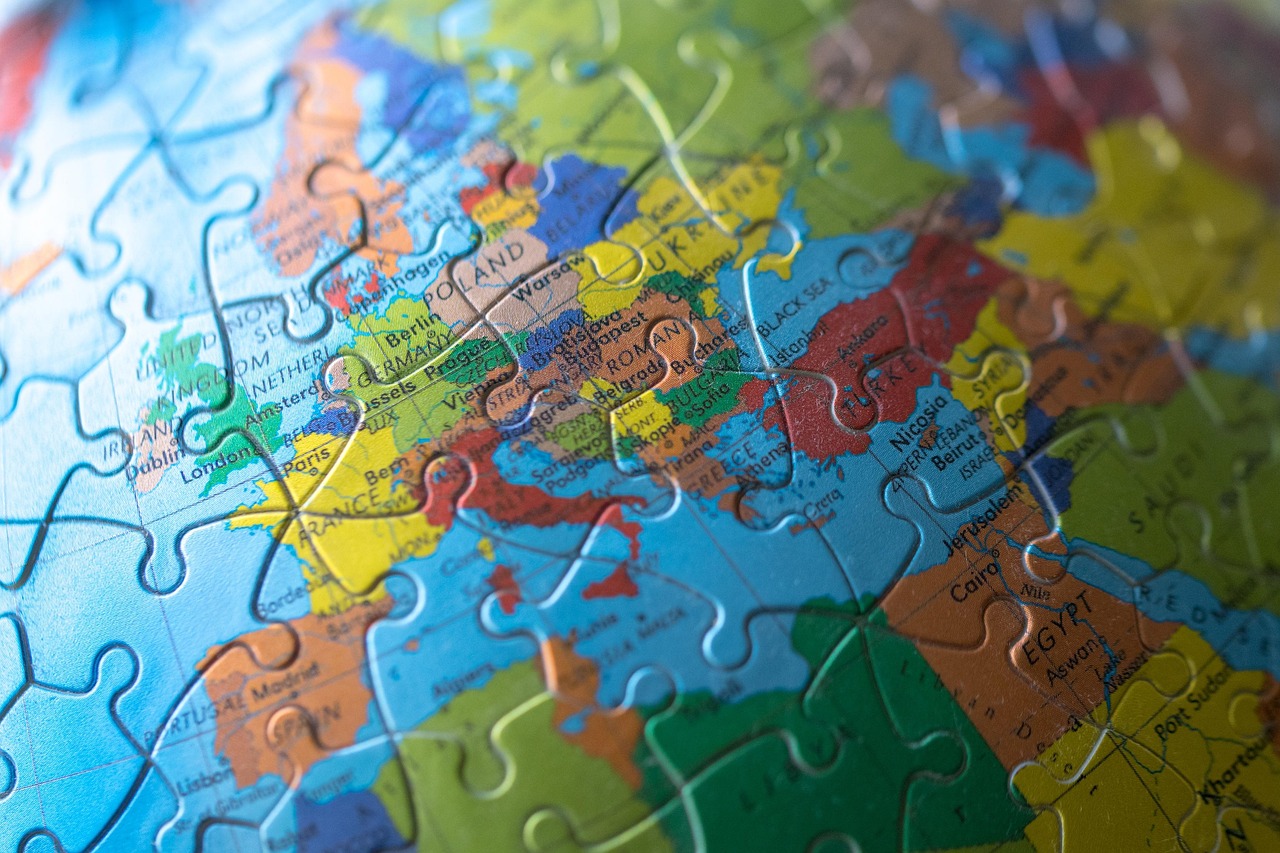
The first jigsaw puzzle was invented by an English map engraver named John Spilsbury in 1762. He mounted one of his master maps onto wood and then cut around the countries. He then gave these puzzles to children in the local school to help the children with their geography education. Spilsbury’s invention was an instant hit, and the concept was soon copied by others and expanded into other educational images.
(Pixabay stock photo)
We’ve come a long way since then, of course. And for me, the strangely shaped yet interlocking pieces of jigsaw puzzles and the effort that it takes to connect them and make of them things of beauty offer us grownups lessons worth pursuing.
I’m reminded of Anne Lamott’s classic writing how-to book BIRD BY BIRD: Instructions on Writing and Life — which may still be on the syllabus of every college’s creative writing course. As I recall the backstory, Anne’s little brother had lost his grammar school report on birds that he’d worked hard on for weeks and which was due the next day. He was utterly distraught, so he turned to their father for help.
“How can I REDO this, Dad?! I’m going to fail!” the boy cried.
“How, son? Bird by bird,” his father responded. “Bird by bird.”
And so it is with life’s puzzle pieces, I guess. We have no choice but to keep trying to find the answers, form full sentences in whatever language that make sense – bird by bird, word by word, piece by piece – for as long as we’re here. That is if we don’t want to fail.
(Stock photo)
 find me on facebook
Love this one, Bonnie!
Thank you, dear Karen!
Another fascinating and charming column, Bonnie
Thanks so much, John!
I love this article. I drove my mother crazy with “why” questions too. I still question everything. BTW Spanish is the easiest language in the world to learn. It is sooo consitent and logical. It’s my favourtie.
Thank you, Pat. I only wish I had your talent for languages!
I was never a fan of rompecabezas, but my mom is 🙂 By the way, I still remember your Spanish presentation about the parrot in my UNM class. Estaba muy buena. You know more than you think, Bonnie querida!
Gracias, querida Te. It’s a long, slow climb for me, it seems! I hope you’re doing well. — xx
One of the happiest moments in life is when you find the courage to let go of what you can’t change
Perhaps. But I’m sure you’d agree, Rick, that first we need the courage to change the things we can.
I share your experience of the cruelty in our midst. The only theory that might explain the existence of evil is the “Earth is a school room” theory. We are eternal souls and have come here to learn lessons. If everything were perfect there would not be important lessons to learn and things to experience. That’s my best shot at the question which I ask all the time.
Hmmm… Toni. Interesting theory! Having been a university instructor who’s stood in the front of a lot of classrooms, I worry that many of the students in this Earth School are not likely to pass the final exam because they’re not doing their homework.
Another wonderful, thought-provokingNewsletter, Bonnie. I share your puzzlement (and anger)with where the world is today; it seems we’ve not come far past the caveman’s brain when it comes to creating a peaceful world for all, one of compassion and kindness. It puzzles and angers me. I also share the puzzeling process of learning the
Spanish language—poco-a-poco —word by word, verb tense by verb tense!
Thanks so much, Sher. Yes, “verb tense by verb tense” — how I wish they would stick! 🙂
I too had trouble with Spanish. Took Spanish 3 times before I finally passed with a D. Probably have trouble with any language other than my own. And some question that as well. However, I am happy here even with Trump’s chaos. Good luck and happy life wherever you end up.
Thank you for your good wishes, Daniel. I appreciate your comment. Buena suerte to you, too!
well said! xoxox
Gracias, querida Kim! — xx
Another lovely tale… And, it’s a ‘rompecabezas’ trying to understand why we can be so mean at times…
C
Ah, si, Carolina, this is indeed a puzzlement. I’m hoping to get the answers to these questions in the next realm. 🙂
I needed this valuable lesson today. It will help so much when things seem too overwhelming. Gracias!!
De nada, Courtney! Yes, we all have days when things seem too overwhelming… Today is one of those days for me. Hope you’re doing well and following dr.’s orders. — xx
Dear Bon,
I loved doing puzzles as a child. I remember them all as having “calendar art,” but I cannot specifically recall any one puzzle. I don’t remember thinking at the time that the puzzles broke my head in the way you suggest. Perhaps you have to be somewhat mature to question your own ideation in that way?
I find that when I speculate on the answers to questions such as you pose, it breaks not my head but my heart.
Love,
Paul
Oh, yes, Paul dear — it breaks my heart too. — xx